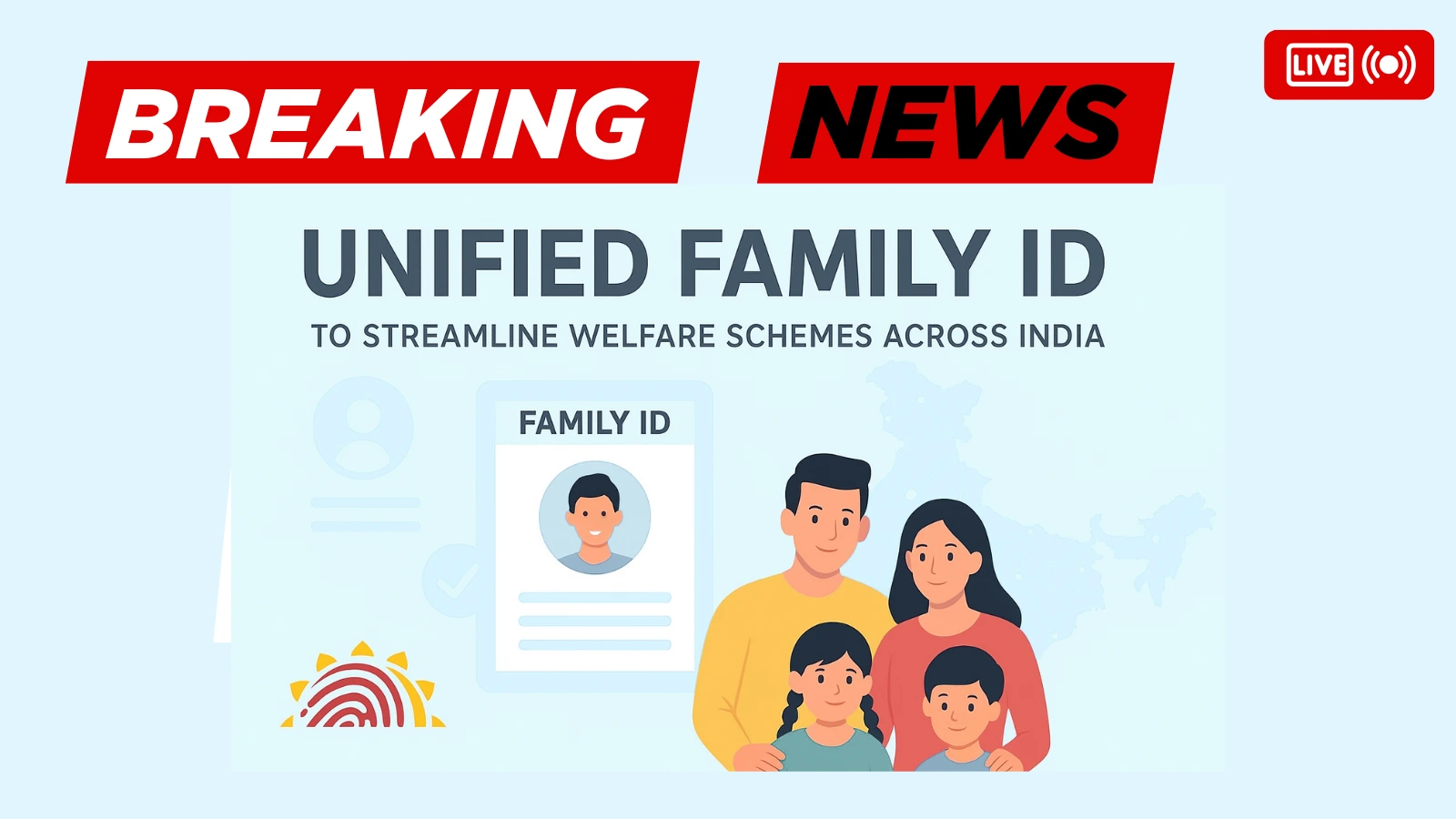
The Government of India has taken a major step to simplify welfare access for millions of citizens by introducing a Unified Family ID (UFID) system. Designed to link every household to a single digital identifier, the initiative aims to make government benefits faster, transparent, and more targeted.
The UFID system is expected to bring together ration cards, Aadhaar, Ayushman Bharat, Ujjwala, pension schemes, scholarships, and social security programs under one integrated digital record.
What Is the Unified Family ID (UFID)?
The UFID assigns every Indian family a unique digital number, allowing various government departments to access verified socio-economic data in real time.
The system focuses on:
- Eliminating duplicate beneficiaries
- Ensuring timely delivery of subsidies
- Improving transparency
- Reducing paperwork for the public
States like Haryana (Parivar Pehchan Patra), Uttar Pradesh (Family ID – Ek Parivar Ek Pahchan), and Madhya Pradesh already use similar systems. Now, the Centre is working to standardize it nationwide.
Why This Matters for Citizens
The biggest beneficiaries will be economically weaker families, especially in rural and semi-urban regions, where welfare access often gets delayed due to documentation issues.
With a Unified Family ID:
- Families won’t need to submit repeated documents
- Welfare schemes will auto-identify eligible households
- Government departments will coordinate better
- Errors and delays in delivery will drop significantly
This system promises a smoother experience for pensioners, students, farmers, women, and low-income households.
Key Features of the New UFID System
1. Single Digital Identity for the Entire Family
Links all family members and documents to one unified code.
2. Eligibility Auto-Verification
Schemes like PM-KISAN, Ayushman Bharat, and LPG subsidies will be auto-validated.
3. 100% Paperless Processing
No need to repeatedly carry income certificates, caste certificates, domicile proofs, etc.
4. Integration with Aadhaar & State Databases
Ensures accuracy and prevents fraud.
5. Priority Delivery for Critical Schemes
Widows, senior citizens, and disabled persons will receive faster approvals.
How Families Will Get Their UFID
The government plans to launch:
- Online self-registration portal
- Mobile app
- Common Service Centres (CSCs) in villages and towns
Citizens will need:
- Aadhaar of family members
- Address proof
- Mobile number
Once verified, the Unique Family ID will be issued digitally.
Expert Opinions & Public Reaction
Social policy experts say the initiative could become India’s biggest welfare reform after Aadhaar, reducing leakages and ensuring equitable distribution of benefits.
Citizens, especially from rural areas, have welcomed the decision, saying that a unified system will help reduce the “running around” between offices.
Potential Challenges
While promising, the system must address:
- Data privacy
- State-centre coordination
- Integration with outdated district-level databases
But with phased rollout and strict security protocols, experts believe these challenges can be managed.
Conclusion
The Unified Family ID is poised to reshape how welfare schemes reach the people of India. For millions of families, this means fewer documents, faster benefits, and greater transparency.
As it moves into implementation, Growing Bharat will continue tracking its rollout, impact, and citizen experiences—ensuring that essential information reaches every corner of the country.